
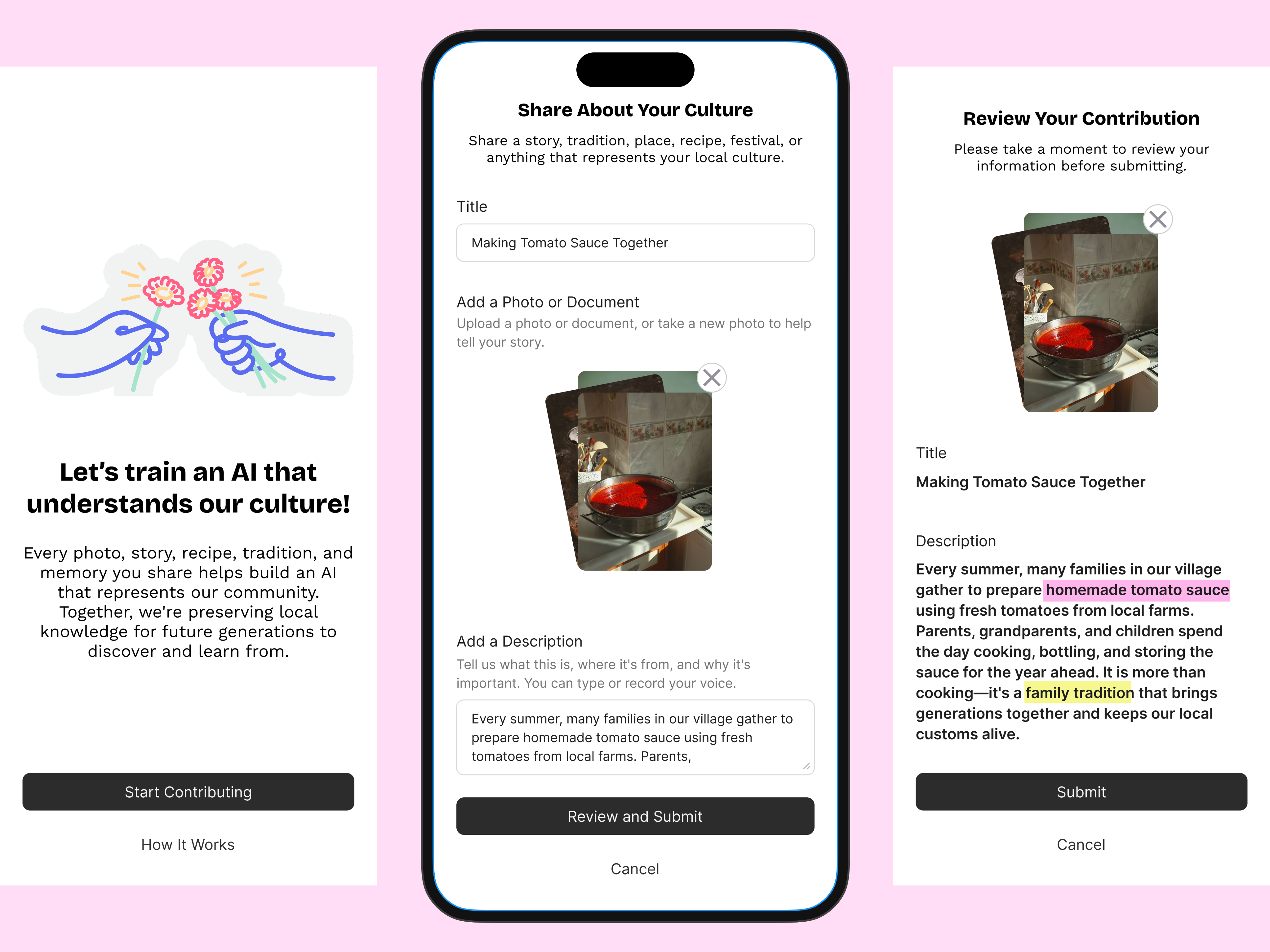
3 Step Data Collection Interface to Train AI
Designed a simple mobile experience for adults aged 50+ in Italy to easily contribute local cultural knowledge through photos, voice, text, and documents. Their contributions help train LLMs while making the experience effortless and rewarding.
scope
Research · Human-AI System Design · AI Data Collection · LLM Modeling · Production Code · Design Engineering
my role
Lead Design Engineer responsible for user research, product design and production-ready frontend.
SUMMARY
CulturaAI is a community-powered platform that helps adults aged 50+ preserve local culture and contribute data for LLM training. As the lead design engineer, I designed the end-to-end experience for sharing cultural knowledge through photos, voice, text, and documents. I also used AI-assisted tools to prototype production-ready interfaces. The experience makes contributing to LLM training simple and rewarding.
↑41%
Task Completion
↓78%
Data-entry Errors
↑35%
User Participation
The challenge
Much of our local cultural knowledge lives with people and risks being lost over time. We wanted to make it easy for adults aged 50+ to preserve this knowledge while creating high-quality data that can train an LLM. The challenge was to design an experience that felt simple and familiar for contributors while collecting structured data that future generations and AI systems can easily access and learn from.
Design & Build: From Figma to Production in One Week
I designed the complete experience in Figma, including user flows, interactions, and a simple design system for older adults. I then used Cursor and Claude Code to build the app in Flutter. This AI-assisted workflow helped me turn designs into production-ready code, test ideas quickly, and iterate faster. By combining design with AI-powered development, I moved from concept to a functional mobile app in just one week.
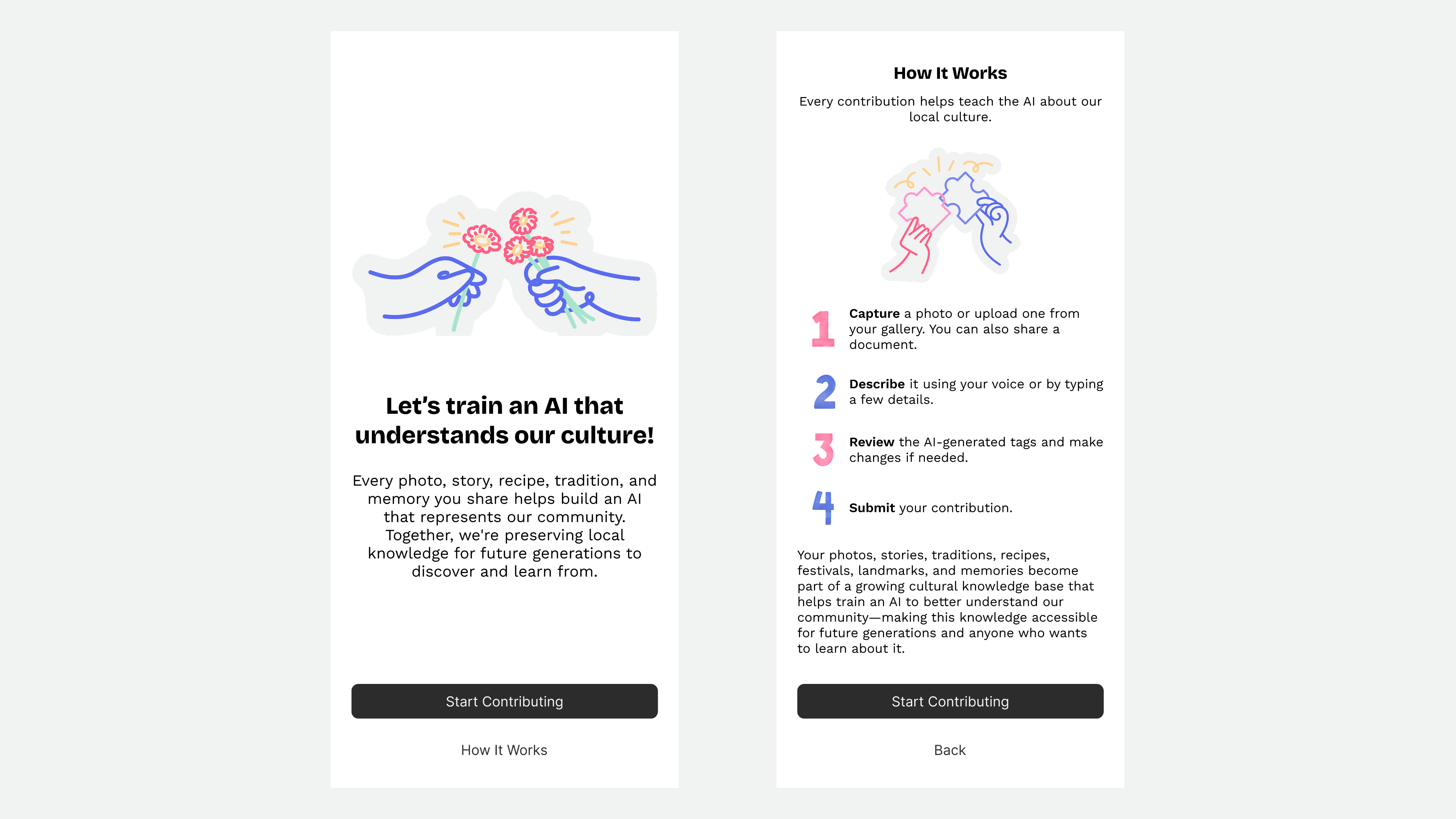
Building Trust to Encourage Cultural Contributions
Many users were unfamiliar with AI and unsure why they should contribute. I interviewed older adults to understand their motivations, concerns, and comfort with technology. I found that people were willing to share when they understood the purpose and felt their contribution was valuable. I designed a welcoming home experience that clearly explains what to do, why it matters, and how their knowledge helps preserve culture and improve AI.
Key Design Decisions
Used a warm introduction, simple language, and a clear explanation of how their contributions help
Results
↑ 110+ people signed up to contribute.
↓ Reduced hesitation for less tech-savvy users
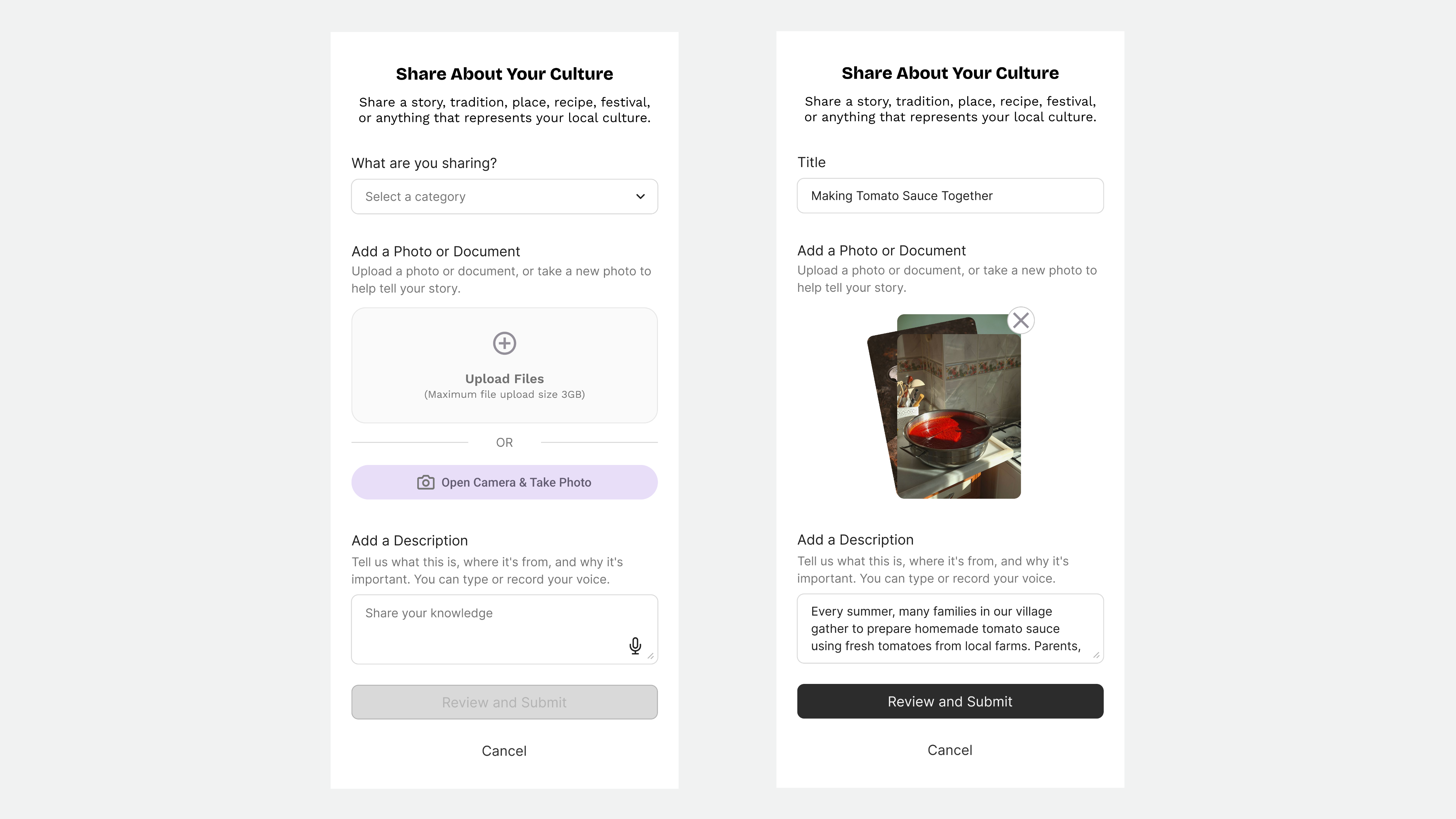
Flexible Content Upload for Ease and Richer AI Training Data
Everyone shares information differently. I observed how older adults naturally documented memories and local knowledge. Some preferred speaking, while others found taking photos easier than writing. I designed a flexible contribution flow that supports photos, voice, text, and documents. AI then organizes the content into structured data for LLM training.
Key Design Decisions
Supported multiple input methods, guided prompts, voice-to-text, and automatic AI tagging
Trade-offs & Constraints
More input options increased development complexity but made it easier for people to contribute
Results
+ 3 in 4 completed contribution
↓ Data-entry Errors by 78%
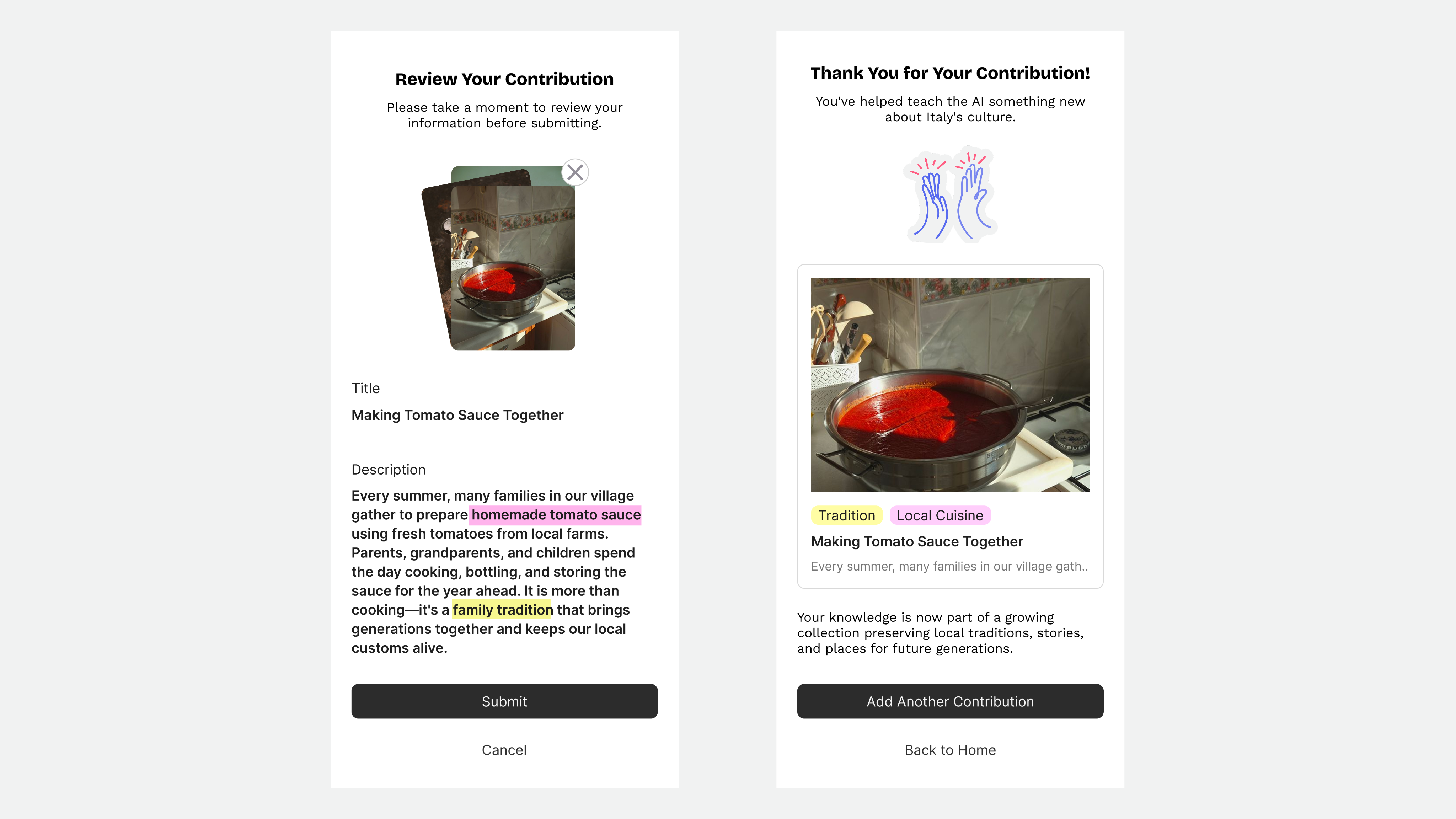
Rewarding Contributions to Drive Continued Participation
Contributing cultural knowledge should feel meaningful, not transactional. Research showed that people were more motivated when they knew their contribution mattered. I designed a completion experience that celebrates each contribution and reminds users that they are helping preserve local culture and improve AI for future generations.
Key Design Decisions
Designed an encouraging completion experience, and clear reminders of the impact of every submission.
Trade-offs & Constraints
Focused on meaningful feedback rather than gamification to keep the experience respectful.
Results
↑ Repeat Contributions by 32%
↑ 4 in 5 users expressed satisfaction
reflection
The biggest lesson was that good AI experiences start before the model. They begin with thoughtful interfaces that help people interact with AI naturally, confidently, and accurately.
3 Step Data Collection Interface to Train AI
Designed a simple mobile experience for adults aged 50+ in Italy to easily contribute local cultural knowledge through photos, voice, text, and documents. Their contributions help train LLMs while making the experience effortless and rewarding.
scope
Research · Human-AI System Design · AI Data Collection · LLM Modeling · Production Code · Design Engineering
my role
Lead Design Engineer responsible for user research, product design and production-ready frontend.
SUMMARY
CulturaAI is a community-powered platform that helps adults aged 50+ preserve local culture and contribute data for LLM training. As the lead design engineer, I designed the end-to-end experience for sharing cultural knowledge through photos, voice, text, and documents. I also used AI-assisted tools to prototype production-ready interfaces. The experience makes contributing to LLM training simple and rewarding.
↑41%
Task Completion
↓78%
Data-entry Errors
↑35%
User Participation
The challenge
Much of our local cultural knowledge lives with people and risks being lost over time. We wanted to make it easy for adults aged 50+ to preserve this knowledge while creating high-quality data that can train an LLM. The challenge was to design an experience that felt simple and familiar for contributors while collecting structured data that future generations and AI systems can easily access and learn from.
Design & Build: From Figma to Production in One Week
I designed the complete experience in Figma, including user flows, interactions, and a simple design system for older adults. I then used Cursor and Claude Code to build the app in Flutter. This AI-assisted workflow helped me turn designs into production-ready code, test ideas quickly, and iterate faster. By combining design with AI-powered development, I moved from concept to a functional mobile app in just one week.
Building Trust to Encourage Cultural Contributions
Many users were unfamiliar with AI and unsure why they should contribute. I interviewed older adults to understand their motivations, concerns, and comfort with technology. I found that people were willing to share when they understood the purpose and felt their contribution was valuable. I designed a welcoming home experience that clearly explains what to do, why it matters, and how their knowledge helps preserve culture and improve AI.
Key Design Decisions
Used a warm introduction, simple language, and a clear explanation of how their contributions help
Results
↑ 110+ people signed up to contribute.
↓ Reduced hesitation for less tech-savvy users
Flexible Content Upload for Ease and Richer AI Training Data
Everyone shares information differently. I observed how older adults naturally documented memories and local knowledge. Some preferred speaking, while others found taking photos easier than writing. I designed a flexible contribution flow that supports photos, voice, text, and documents. AI then organizes the content into structured data for LLM training.
Key Design Decisions
Supported multiple input methods, guided prompts, voice-to-text, and automatic AI tagging
Trade-offs & Constraints
More input options increased development complexity but made it easier for people to contribute
Results
+ 3 in 4 completed contribution
↓ Data-entry Errors by 78%
Rewarding Contributions to Drive Continued Participation
Contributing cultural knowledge should feel meaningful, not transactional. Research showed that people were more motivated when they knew their contribution mattered. I designed a completion experience that celebrates each contribution and reminds users that they are helping preserve local culture and improve AI for future generations.
Key Design Decisions
Designed an encouraging completion experience, and clear reminders of the impact of every submission.
Trade-offs & Constraints
Focused on meaningful feedback rather than gamification to keep the experience respectful.
Results
↑ Repeat Contributions by 32%
↑ 4 in 5 users expressed satisfaction
reflection
The biggest lesson was that good AI experiences start before the model. They begin with thoughtful interfaces that help people interact with AI naturally, confidently, and accurately.